Chromatography of Biotherapeuticals – Analyzing and Purifying Peptides and Oligonucleotides
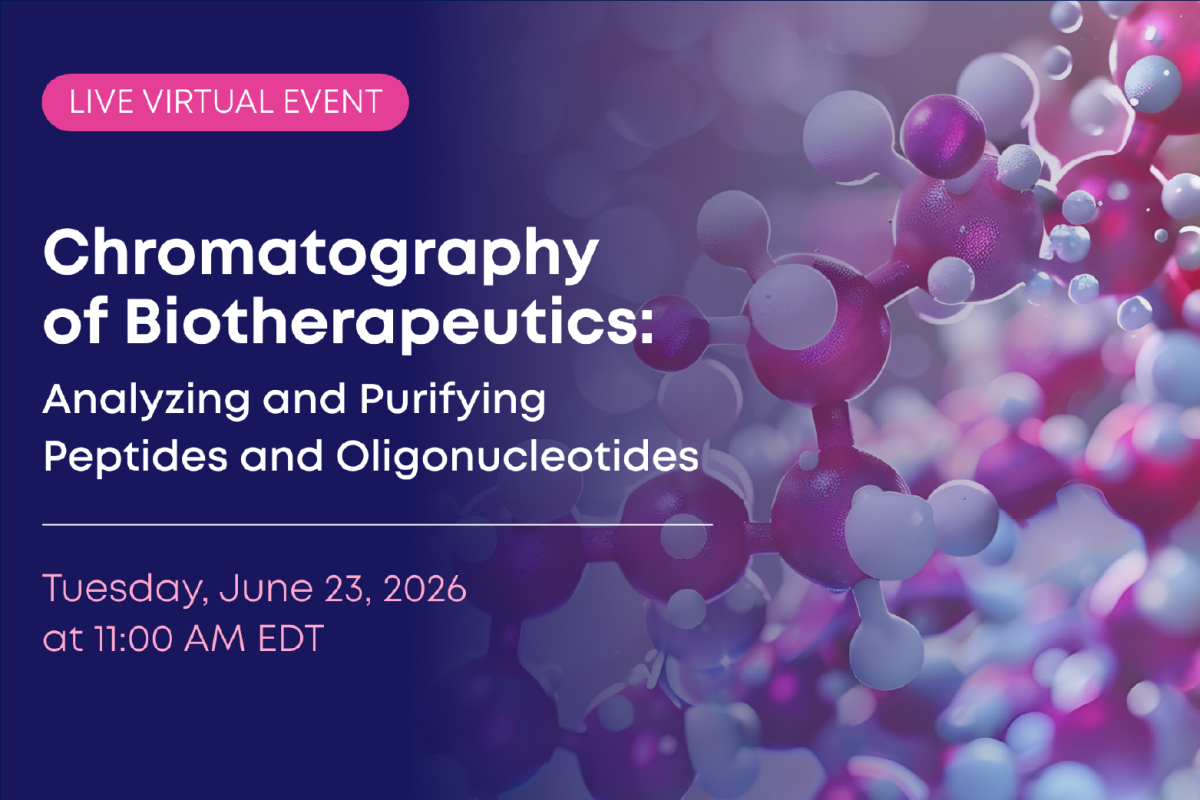
This webinar will highlight how advanced ultra-high-performance liquid chromatography (UHPLC) strategies, carefully selected stationary phases, and bioinert hardware can significantly improve the analysis and purification of peptides and oligonucleotides by enhancing resolution, recovery, and sensitivity. Using the GLP-1 receptor agonist tirzepatide as a representative example, attendees will gain practical insights into chromatographic method development, from analyte assessment and mobile phase selection to stationary phase screening and final method optimization. The webinar will also demonstrate the impact of bioinert hardware on chromatographic performance and show how tailored chromatographic approaches can support reliable characterization, improved reproducibility, and robust quality control of modern biotherapeutics. In addition, the webinar will discuss Twin-Column Chromatography techniques and present an oligonucleotide purification case study using MCSGP.
Presented by Daniel Eßer, PhD, (YMC Euorpe) and J Preston, PhD (YMC America), this webinar is hosted by LCGC on Tuesday, Jun 23 at 11:00 AM Eastern Time. Click here to learn more and register.
Related Posts
September 4, 2026
YMC America Brings U.S.-Supplied ASME U-Stamped DAC Columns to Pharmaceutical Manufacturers
September 10, 2026
Analytical Technologies for Therapeutic Peptides
September 9, 2026